"It's just annoying. I'm dreading it come Monday, because it's the first of the month, and I'll be reposting jobs. It's annoying to have to keep sorting and sorting to find a job that I’m looking for."Enterprise recruiter
Indeed
Envisioning the future of Enterprise jobs
Problem: Indeed’s job management experience was designed for small and medium businesses and didn’t support the complex, varying needs of enterprise employers—limiting Indeed’s enterprise growth.
Solution: I partnered with the team to define a validated strategy for this ambiguous 0 to 1 space that informed the roadmap—streamlining workflows for managing jobs at scale and accommodating highly variable enterprise needs, while preserving a simple experience for individual users.
Impact: "This will change my life! I will no longer be dreading logging-in to Indeed."
My role: Leading design strategy in collaboration with Sr. UX Researcher, Content Designer, Product Manager, Engineers, and a variety of stakeholders.
More on ProcessMore on final resultUNDERSTANDING Enterprise needs
Complexity is the norm
Our research showed that enterprise complexity came in many forms:
- Recruiting teams could include up to 20 people, each managing as many as 100 jobs at a time, making efficiency and organization critical.
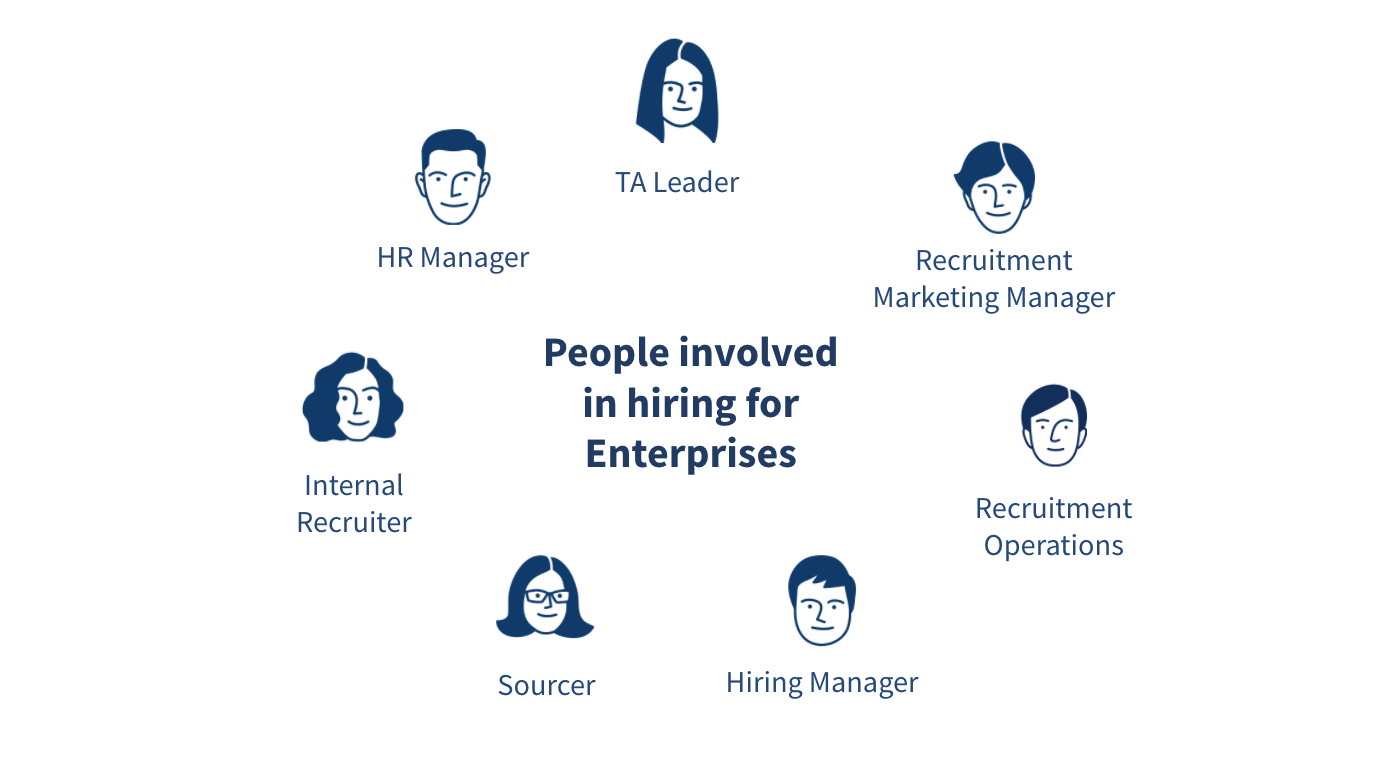
- Hiring is highly collaborative, with different people involved throughout the process.
- Organizational structures and workflows varied significantly across employers, there was no single way of working that fit everyone.
The challenge was to create an experience flexible enough to support different team structures, workflows, and high-volume hiring—while still feeling simple and easy to navigate for an individual user.
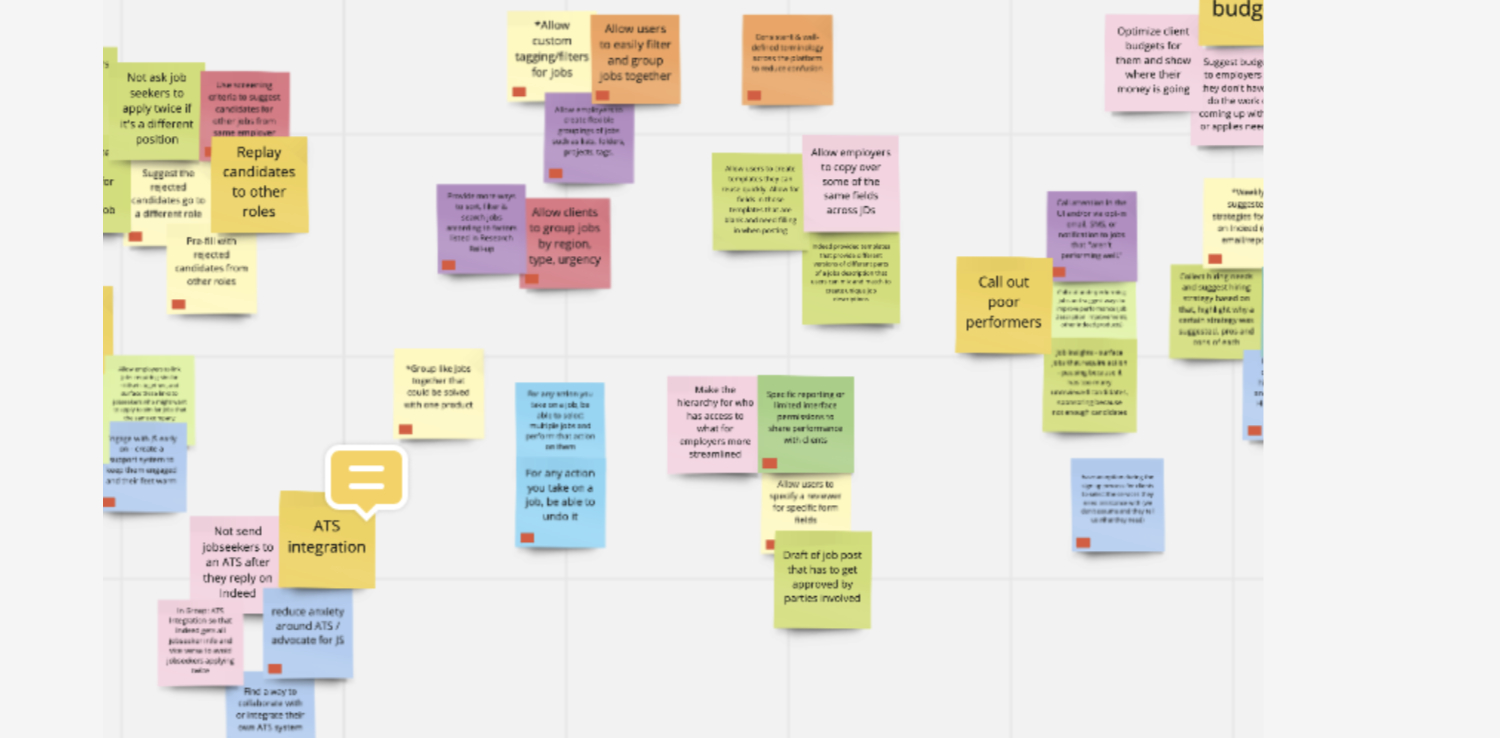
I facilitated a brainstorming session with key stakeholders and cross-functional partners to come up with ideas to solve main problems
Prioritizing impact
Addressing complex enterprise needs
Research and stakeholder interviews surfaced many opportunities. To keep the scope focused, we prioritized problems and ideas based on customer impact, effort, and input from Sales and Customer Success:
- Create a scalable system for organizing and managing a high volume of jobs
- Enable better collaboration across hiring teams
- Provide data-driven guidance to help employers make decisions
- Automate repetitive actions
Concept testing
For more innovative ideas, we did a conceptual test first to see what users thought about them. Then, based on the feedback, we either changed or eliminated them.
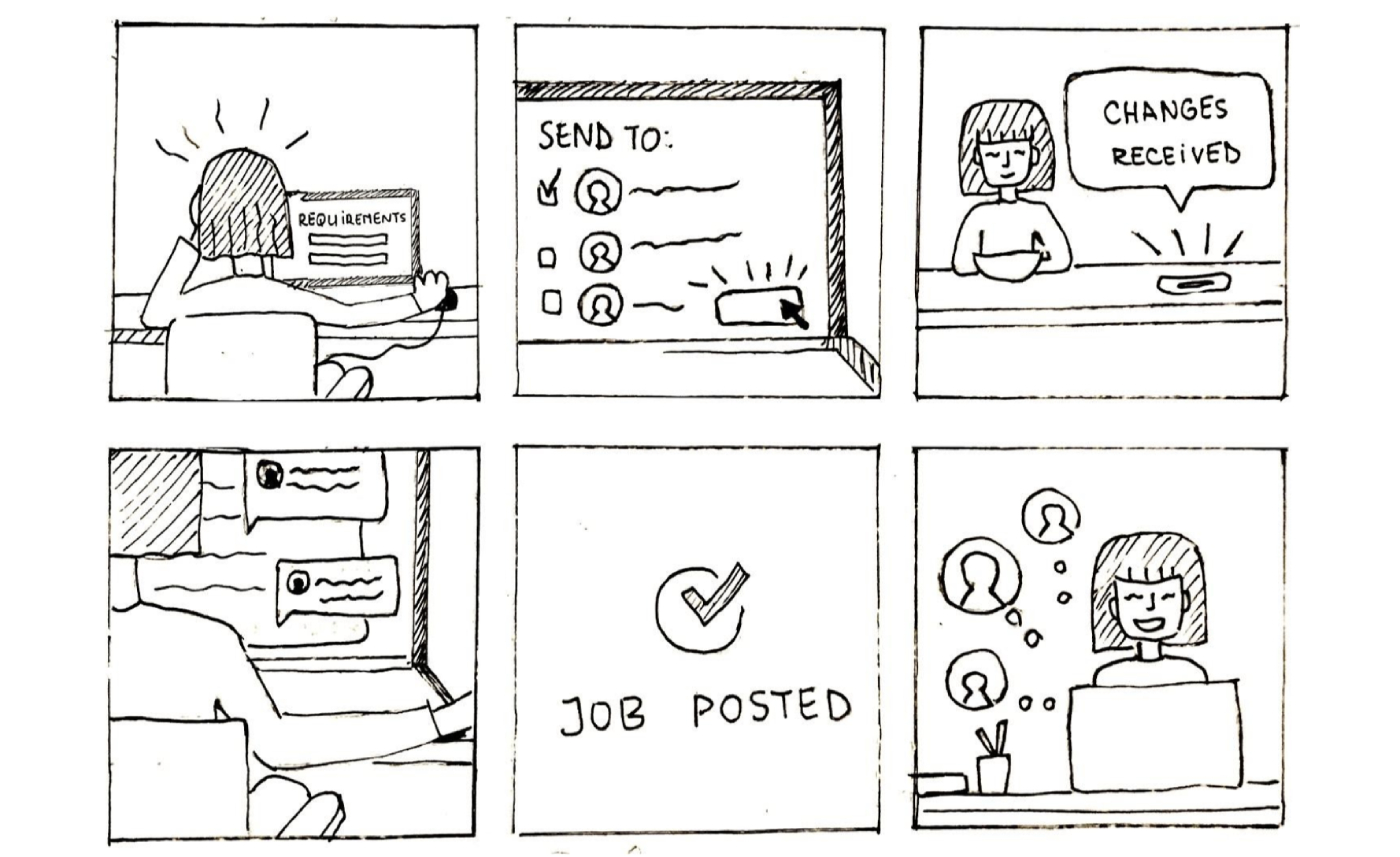
The first concept was around collaboration. It gave a recruiter ability to send the job description to their colleagues for review. After they received the changes, they were ready to finalize the job post. During the research, we've learned that recruiters typically don't collaborate on writing job descriptions. Instead, they needed to explain why a particular job description decision was made and support their decision with data.
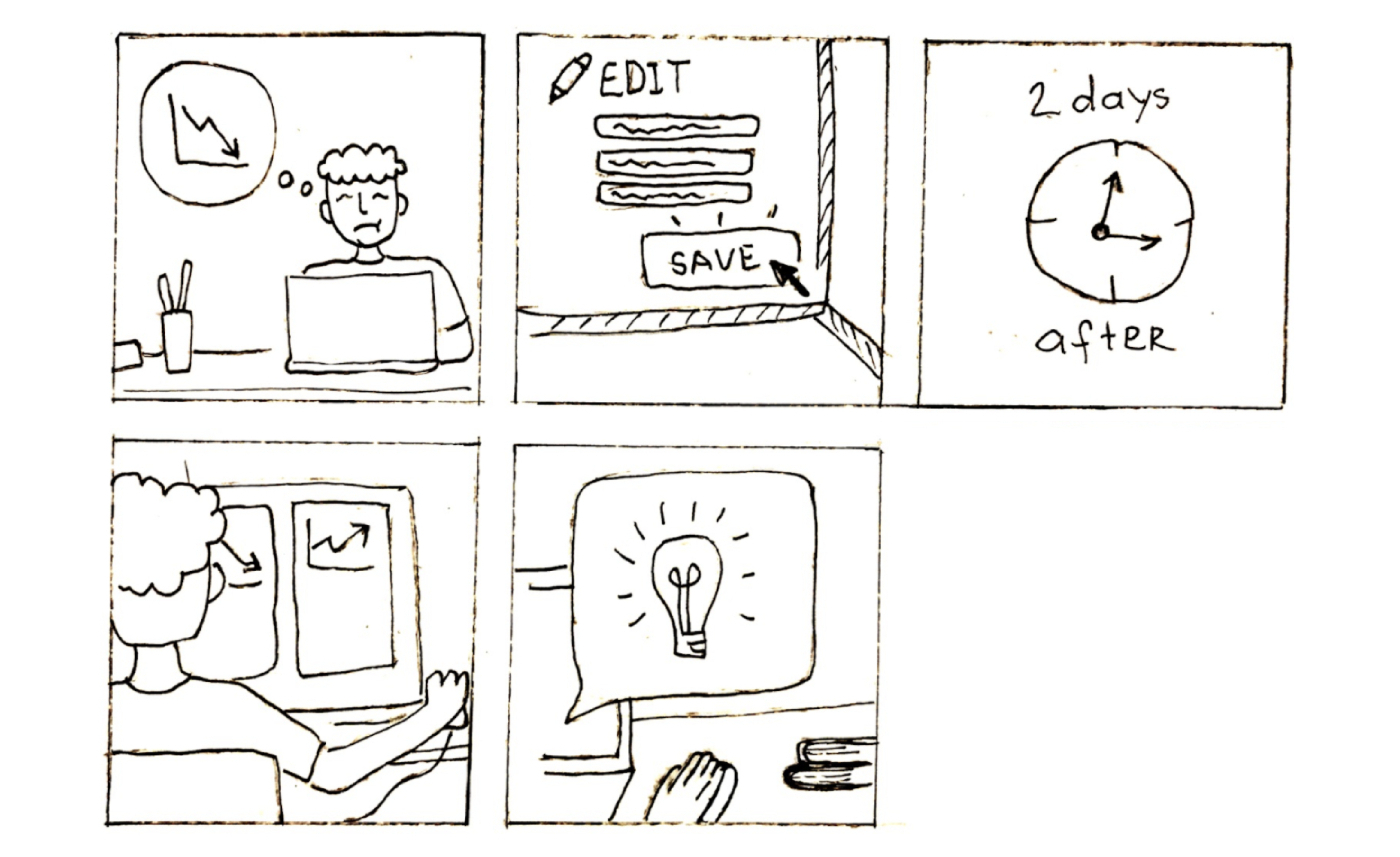
The second concept was around tracking how different changes to jobs affect performance. In the storyboard, the recruiter sees that a job isn't performing well. So, he makes a change (let's say changes a job title) and waits a few days. Later, he comes back and compares how the job is performing now vs how it was performing before the change. Users thought this concept was helpful. Multiple users brought up an ability to A/B test different job titles.
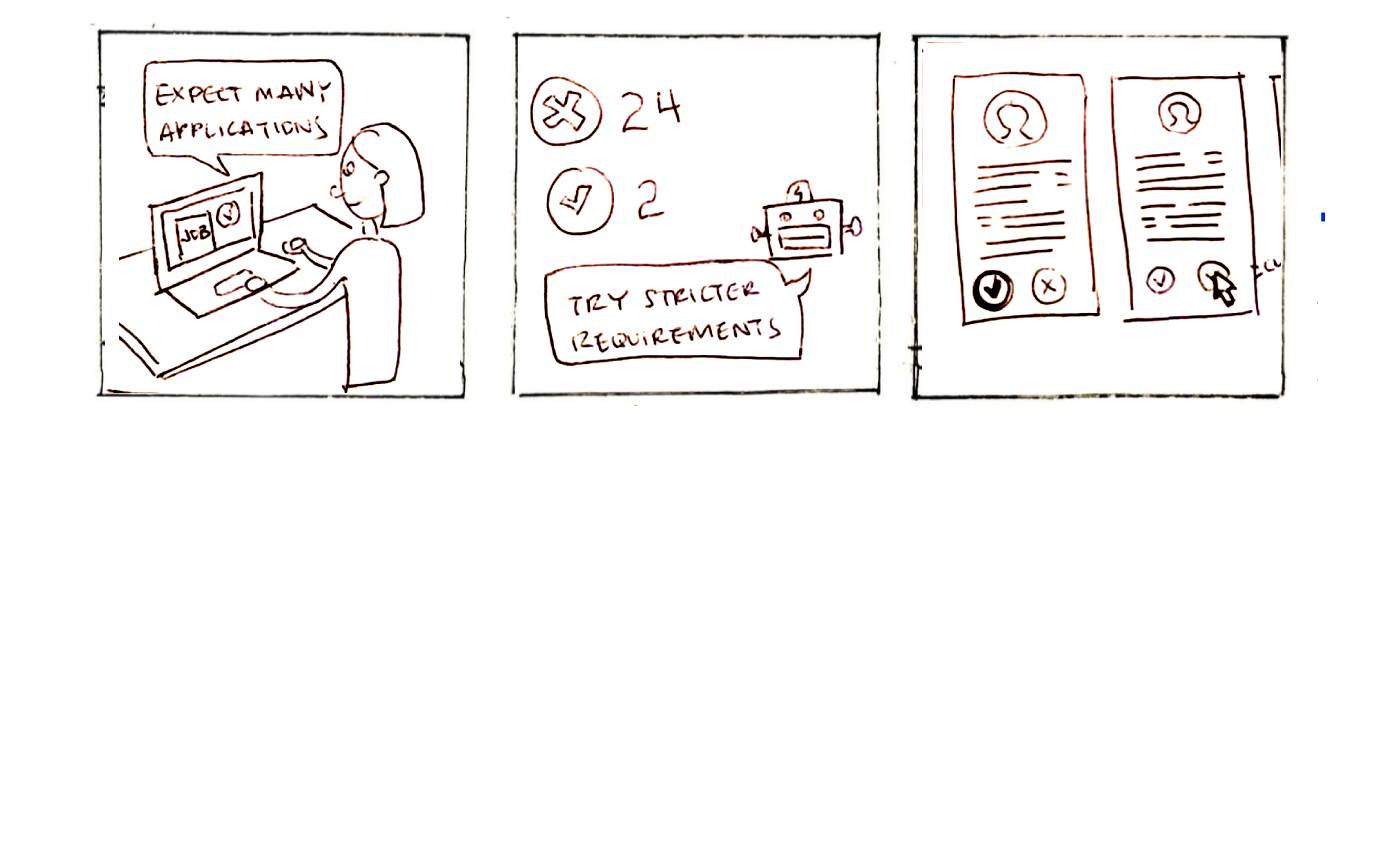
The third concept involved guiding employers by using all the data we had. When an employer posts a job, we will show them an estimated number of applicants they would get with the job title, salary, location, and other details they have selected. We will tell them if they will get too many or too few candidates and what they could do to balance out the candidate flow. In addition, we will inform them how their most recent change affected the estimated applicant number.
The feedback on this idea was positive. Employers thought it would be helpful to have all this information if the estimated numbers were close to the actual results they would get.
Low-fidelity testing and RITE study
After the concept testing, we created low-fidelity mock-ups. We tested them with users to get feedback on how those experiences worked. Then, we did a few rounds of testing that helped to identify and eliminate any usability issues. We iterated a lot and quickly and eventually got to designs that worked well.
Create a job organization system
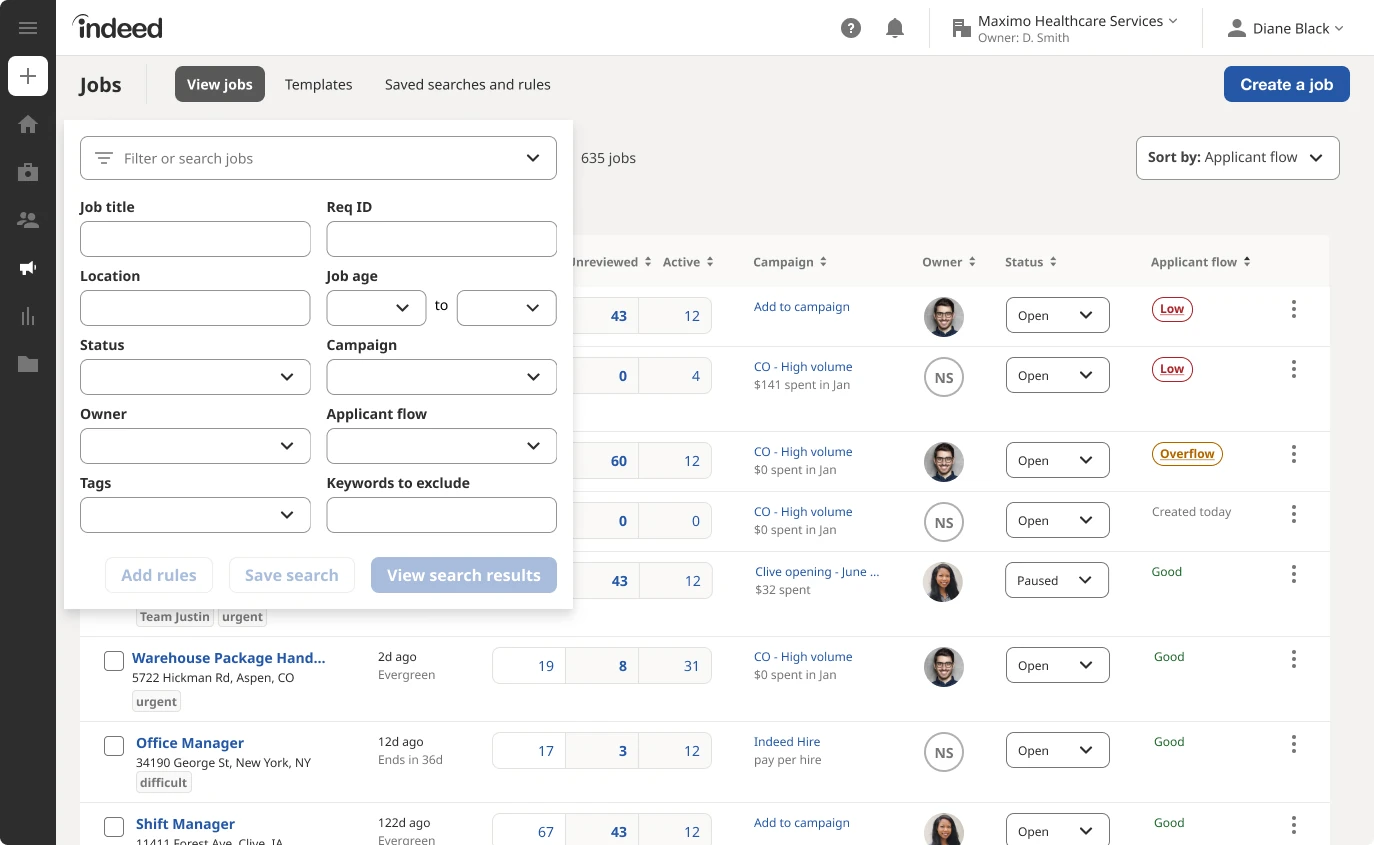
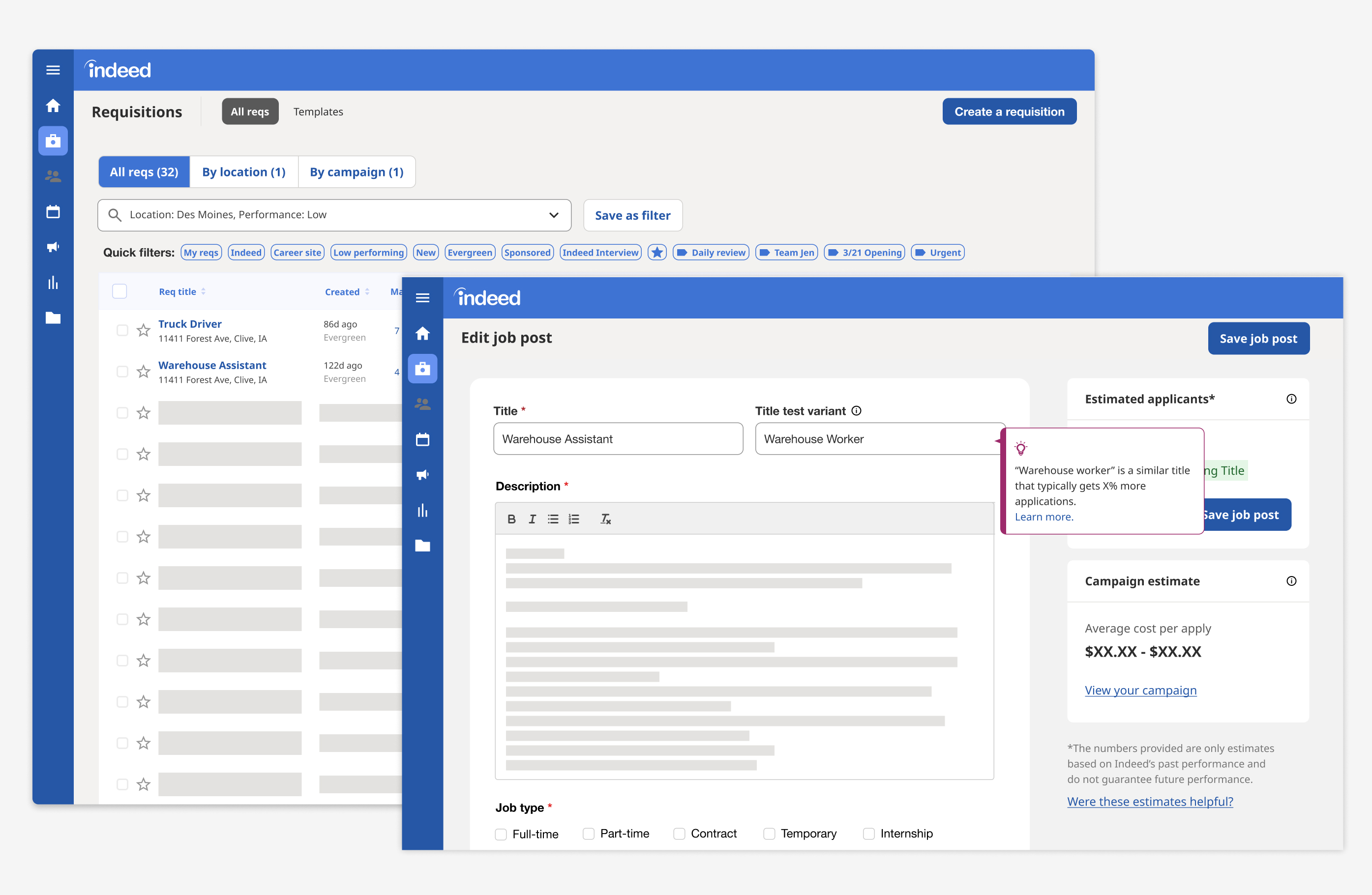
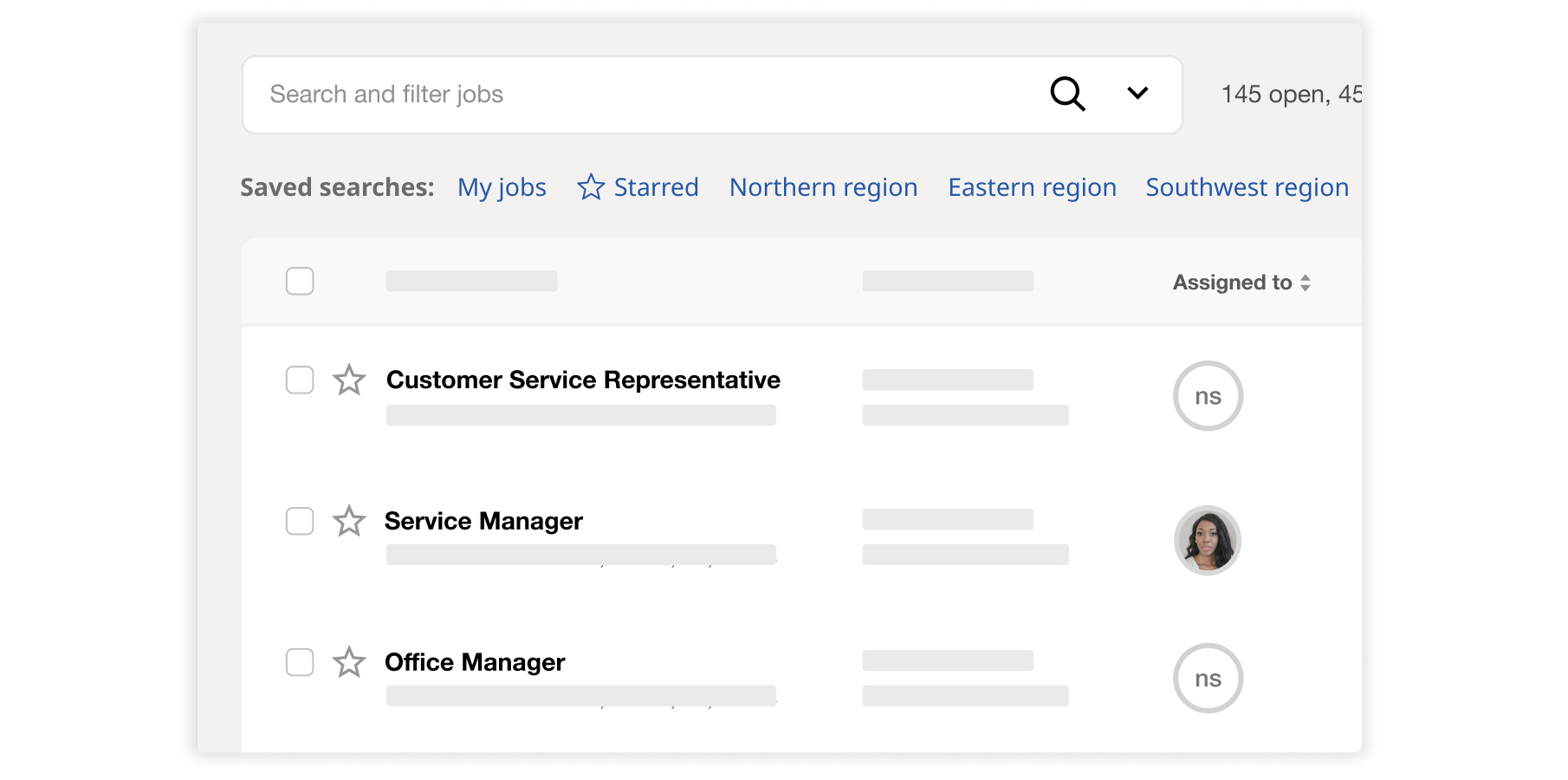
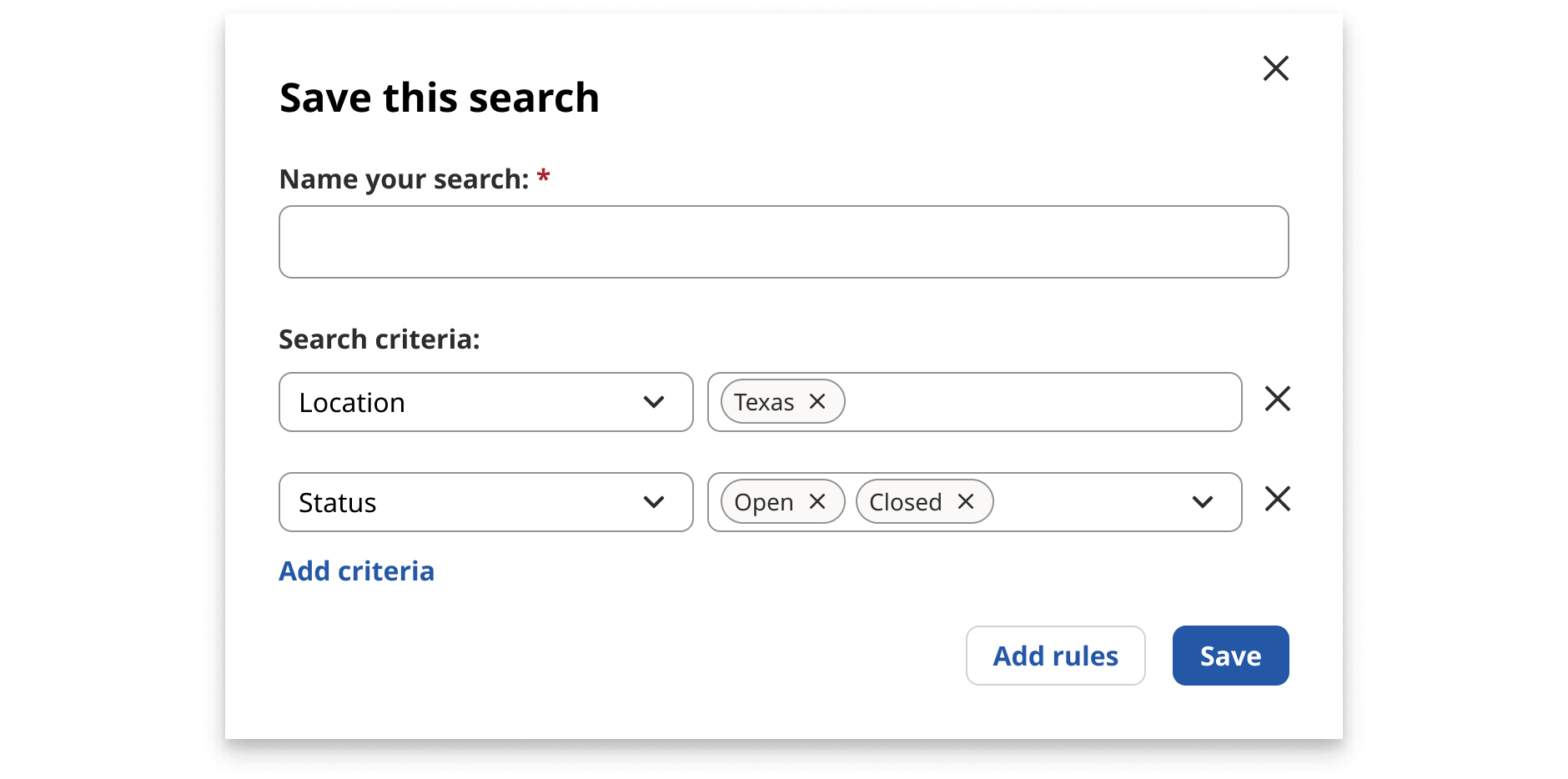
Enterprise employers managed hundreds of jobs and organized them in different ways—by location, role, department, priority, and other criteria. We introduced robust search and filtering, with the ability to save frequently used searches, so employers could organize jobs around their workflows and quickly return to the groups they managed most often.
We also added starring as a lightweight way to keep important jobs easily accessible.
Finalized Design
Signal performance and suggest improvements
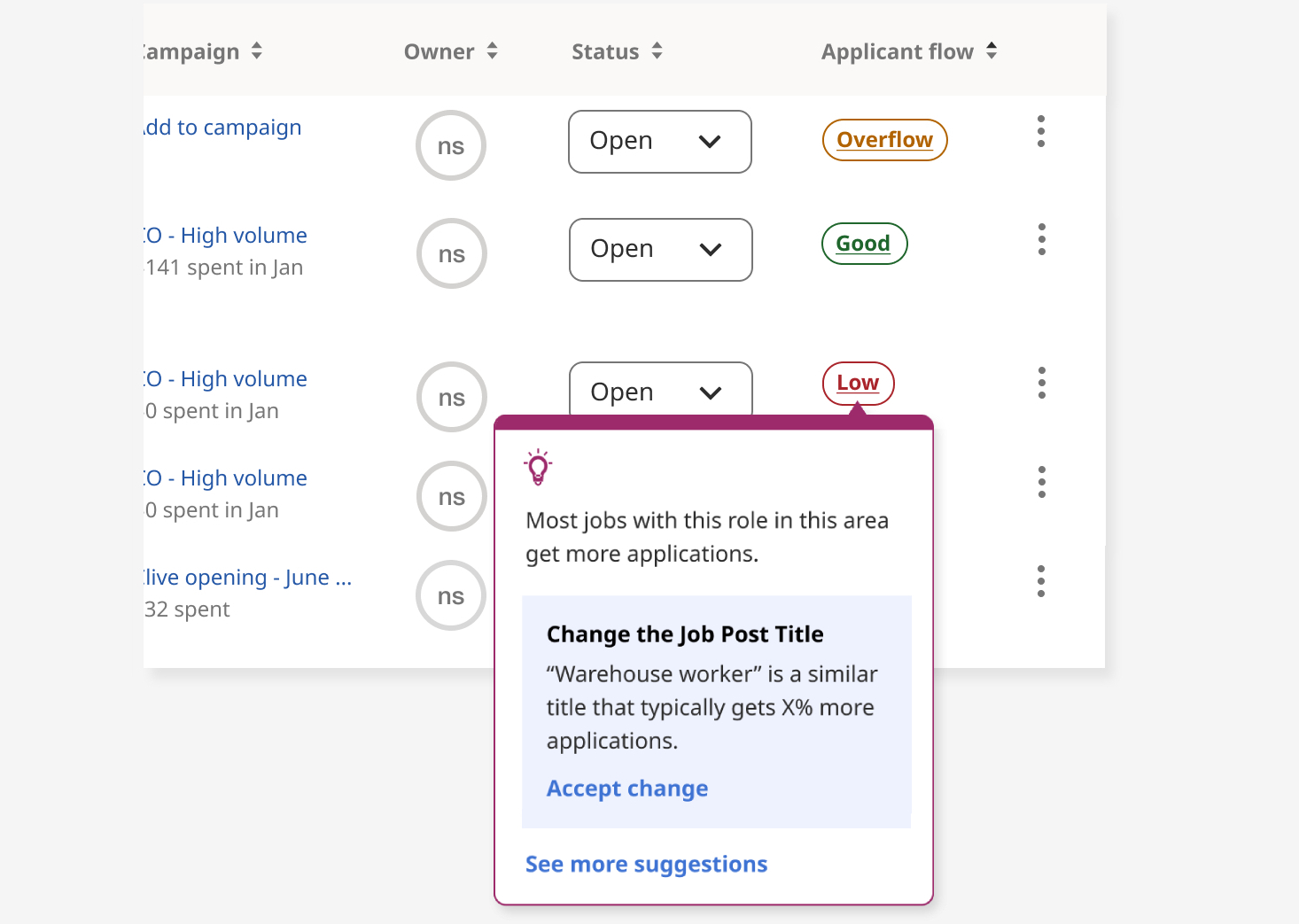
Recruiters are managing hundreds of jobs and needed a quick way to understand where their attention was most needed. We introduced Applicant Flow to surface jobs that were receiving too few or too many candidates, and provide guidance from Indeed on what they could do to improve performance.
Accelerate job management with automation
During research, we noticed recruiters were repeatedly performing the same actions as jobs were added and changed, creating unnecessary manual work.
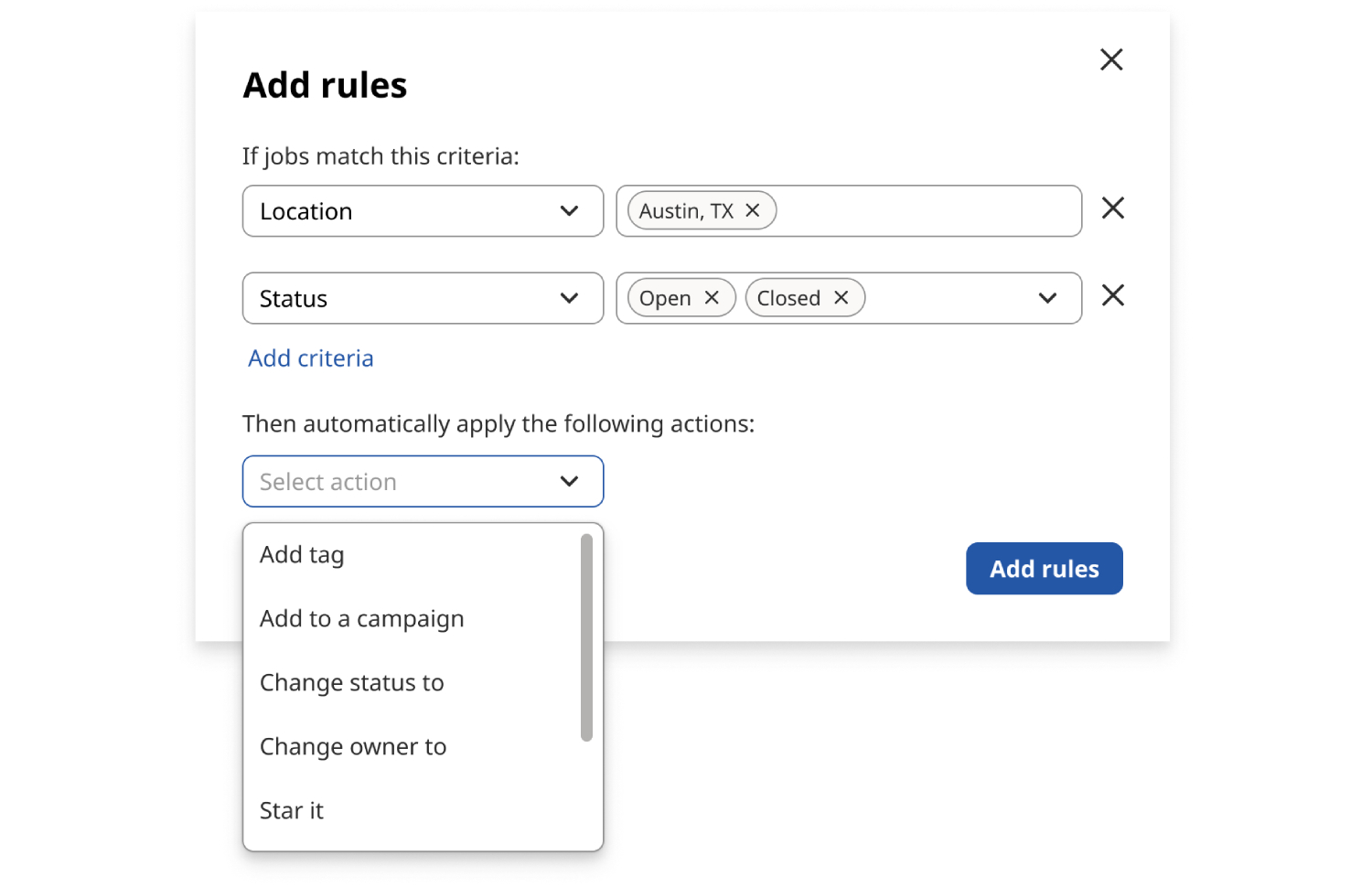
We introduced rules to automate these repetitive actions—for example, automatically assigning every new job in Austin, Texas to a specific recruiter—saving time as the job list continuously changed.